

Education
The Education programme made significant strides in 2025, expanding partnerships with key educational institutions and platforms whilst advancing our pedagogical framework
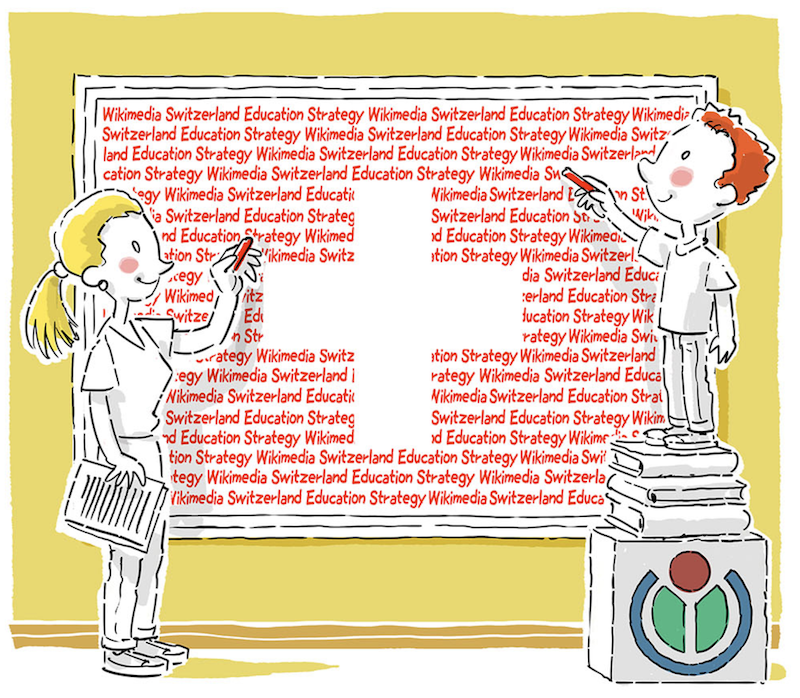
© Ki Bildgenerator Modell: «ideogram 2.0»
Overview
A major focus in 2025 was extending our mission to strengthen the broader open educational resources ecosystem through strategic technical partnerships.
We deepened our work with schools, libraries and educational platforms across Switzerland’s language regions, reaching hundreds of educators.
We also continued developing and adapting educational tools like Wikeys Junior and Dicoado whilst exploring how AI can be used ethically in educational contexts.
Through new partnerships with La Digitale, iMedias and zebis.ch, we demonstrated how technical expertise and collaborative frameworks can create lasting impact in the open education landscape.
Highlight activity
Strategic partnership with La Digitale
© La Digitale
One of the Education programme’s most significant achievements in 2025 was establishing a formal partnership with La Digitale, a platform providing open-source educational tools such as Digipad, Digidoc and Digiscreen. The partnership marks an important step in extending our mission to strengthen the broader ecosystem of open educational resources.
La Digitale reaches over 3.7 million unique visitors per month, primarily French-speaking users but also English and Italian speakers. Through this partnership, we provided crucial technical support, including monitoring and security audits, to help ensure the platform’s sustainability and security.
The partnership was strengthened through collaboration with the Haute École d’Ingénierie et de Gestion du Canton de Vaud (HEIG-VD), which started a security audit of La Digitale’s infrastructure. This three-way collaboration between Wikimedia CH, an open-source educational project and a Swiss higher education institution creates a replicable model for future partnerships.
The partnership with La Digitale demonstrates how technical expertise can help build sustainable relationships with like-minded organisations. Many open-source educational projects struggle with infrastructure sustainability, which creates an opportunity for Wikimedia CH to leverage our technical capabilities to benefit the broader open knowledge ecosystem. The success of this collaboration has already prompted discussions about expanding similar partnerships.
Key programme activities
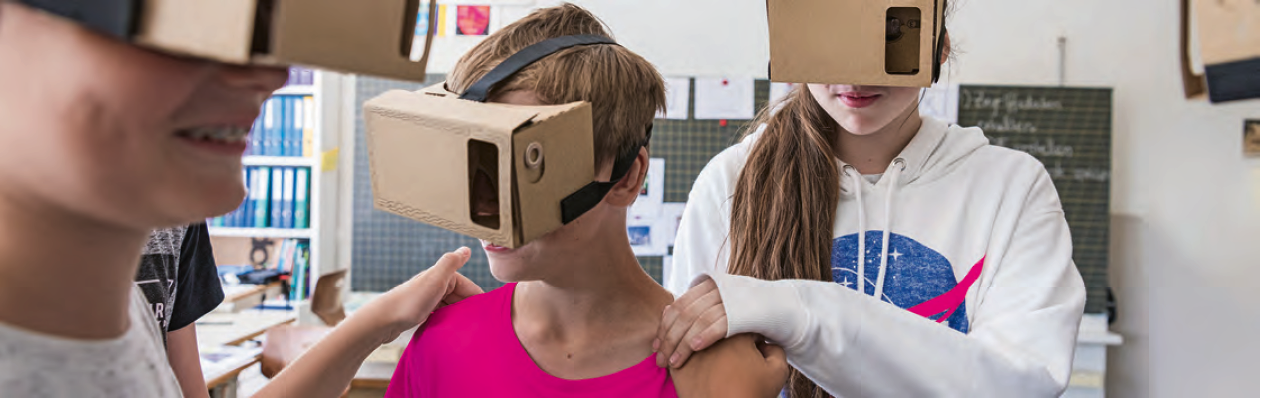
© imedias
Began a partnership with iMedias to support the development of the new version of myMoment, an online learning platform for German-speaking Swiss primary schoolchildren that explores how AI can help students improve their writing skills. We are also co-developing user guidelines and videos around “netiquette” based on Wikiverse ethics and standards.
Co-founded the new Creative Commons Association Switzerland, part of the Creative Commons global network. This strengthens Wikimedia CH’s ability to promote Creative Commons values and interests in Switzerland through increased stability, sustainability and resources.
Partnered with Amnesty International Ticino to create with new media artists Janiv Oron and Niculin Barandun an interactive A.I.-based art installation on the topic “Data, AI training and Biases” for the 10th Media in Piazza, a major educational event in Mendrisio focused on new media. The installation and corresponding workshop reached more than 350 students and teachers.
Began a partnership with zebis.ch, the largest online platform for teaching and learning materials in German-speaking Switzerland—to jointly promote the strengthening of Open Education Resources (OER). Together with LerNetz (the service provider of zebis), we co-organised a successful workshop, which will continue in 2026.
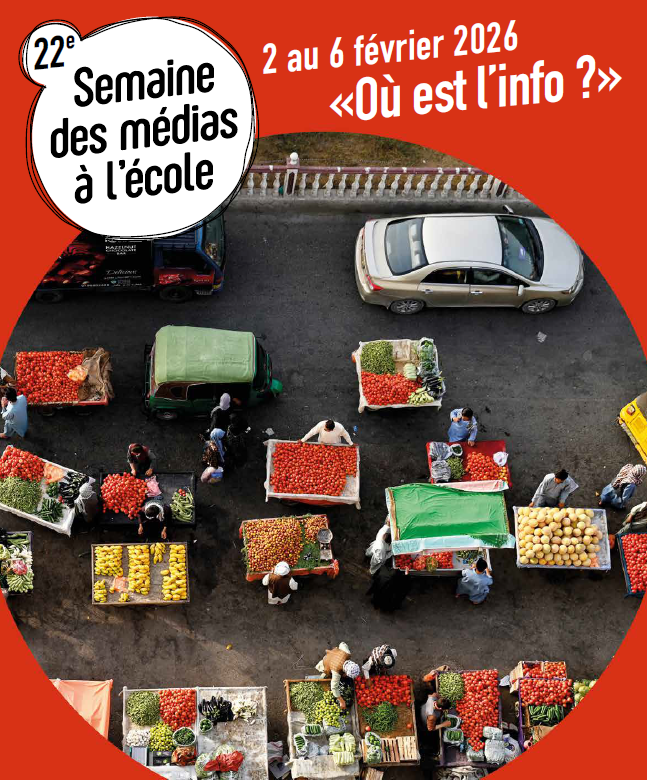
© e-media
Trained more than 50 librarians and public-school educators across French-speaking Switzerland on Wikimedia tools as part of the Semaine des Médias training sessions. Developed scalable training materials and feedback systems for future trainings and forged a relationship with the Renouvaud library network that led to additional Wikidata workshops with external expert Nicolas Vigneron.
Finalised a comprehensive foundational document articulating the programme’s vision and mission linked to pedagogical and didactical methods according to Lehrplan 21 and Plan d’Étude Romand/CIIP.
Finished an external evaluation of the programme through a Certificate of Advanced Studies workshop at the University of Bern in collaboration with Prof. Dr. Wolfgang Bewyl (PH FHNW) to provide valuable insights for programme development.
Presented the OER Reading Wikipedia in the Classroom, a joint project between Wikimedia CH and Wikimedia DE, to the community at WikiCon in Potsdam.
In a workshop, Caroline Boos (WMDE) and Jean-Marc Wyss (WMCH) gathered input for the next revision steps based on an initial German translation.
Financially and technically supported the expansion of myMoment, a German-language platform where students can create and share content in a safe environment, to include a section on “netiquette.
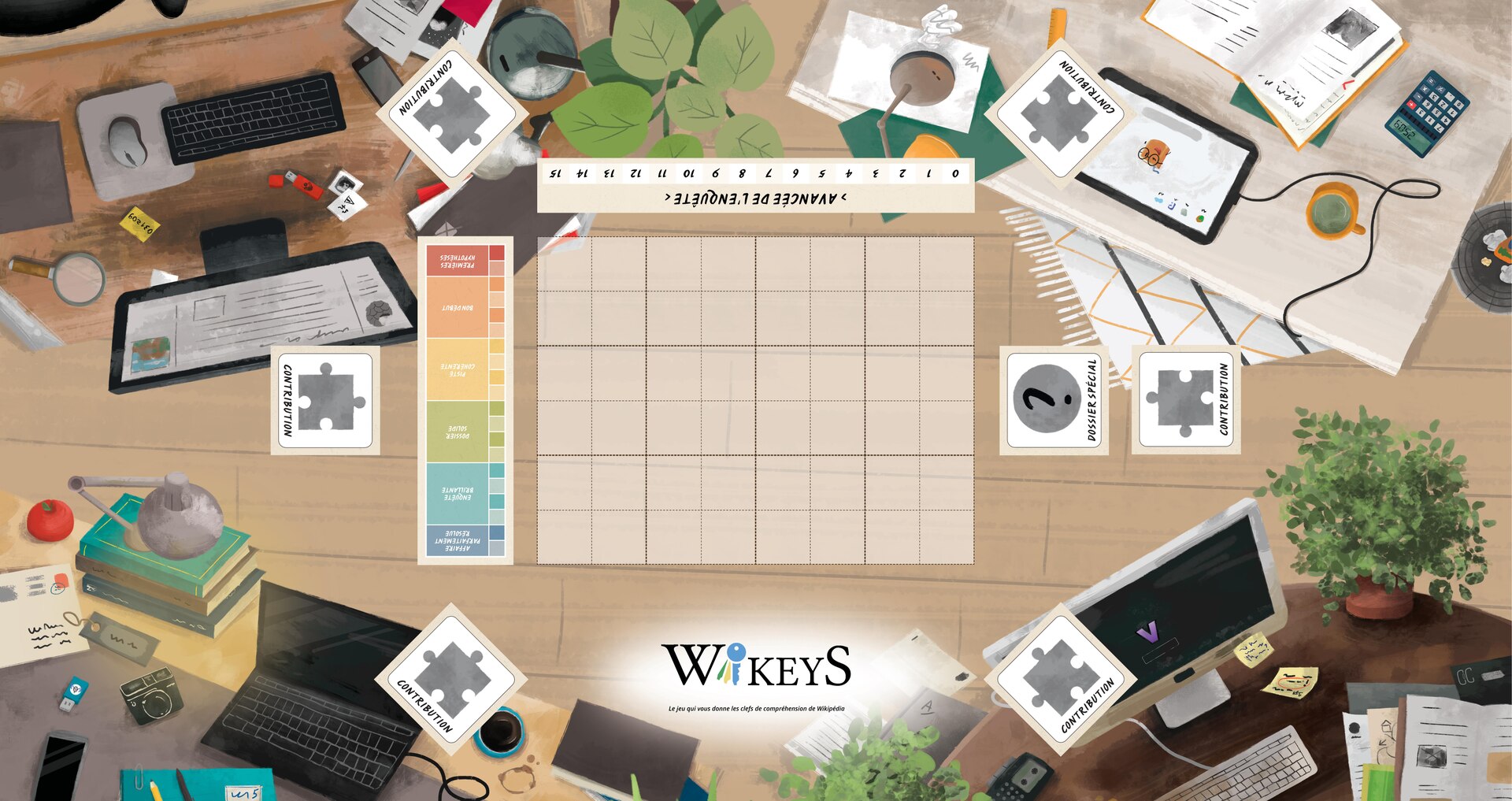
© Thomas Myriam «CookiesOChocola» and Vivian Epiney (WMCH)
Continued presenting, testing and developing Wikeys Junior, including a presentation at TecDay at Lycée-Collège La Planta in Sion.
Adapted Dicoado into Romansh (helping preserve a Swiss minority language) and developed an anti-vandalism AI bot for moderation. We presented the ethically designed AI tool and other AI topics at the Open Education Day along with Programme Innovation.
Programme impact
Key accomplishments
Through the partnership with La Digitale, we extended our mission beyond Wikimedia projects to strengthen the broader OER ecosystem while also establishing a collaboration model between Wikimedia CH, open-source projects, and Swiss higher education institutions.
We leveraged our technical expertise and relationships to benefit a like-minded organisation, creating a replicable model for future collaborations.
Trained more than 50 librarians and public-school educators as part of the Semaine des Médias while developing scalable training materials and feedback systems for future trainings.
Lessons learned
Formalising partnerships takes time
The La Digitale MoU process, from initial contact (May) to signature (September), required multiple iterations and stakeholder alignment.
Technical support is valuable currency
Offering concrete technical assistance (monitoring, security audits) rather than just promotional partnerships creates deeper, more sustainable relationships.
Academic partnerships multiply impact
Involving HEIG-VD students in the security audit provides educational value while delivering professional-quality assessment.
WMCH’s technical team is an asset that can be leveraged for partnerships.
Looking ahead
In 2026, the Education programme will focus on providing OER on specialised online platforms, particularly for lecturers at pedagogical universities and teacher trainings for future teachers, in alignment with Lehrplan 21. To do this, we plan to establish a pool of education experts to advance train-the-trainer programmes and develop new OER products whilst training educators on wiki tools and other skills. Our aim is to make these OER and courses available in all four national languages.
We will also continue expanding our partnerships with educational institutions and platforms whilst deepening our work on ethical AI applications in education. Through these efforts, we aim to position Wikimedia CH as a reliable partner for digital education and open knowledge in Switzerland.